Introduction
Aged for decades or crafted in small, hand-finished batches, high-end spirits owe much of their prestige to rarity and craftsmanship. As the adage goes, “Fine wine deserves a fine bottle.” Indeed, only packaging that matches the liquid’s excellence can truly do justice to its quality.
So, what kind of packaging elevates a spirit’s perceived value?
According to SK Glassworks—with over 20 years of deep expertise in premium spirits packaging—the answer lies in one key element: using the transparency of glass to reflect the liquid’s crystalline purity.
Glass Clarity Grades – Beyond Ordinary
In the world of spirits packaging, glass is categorized by its level of transparency:
|
Grade |
Characteristics |
|
Flint glass |
Standard clear glass, minor greenish tint |
|
Extra flint |
Higher clarity, reduced tint |
|
Super flint |
Near water-white clarity |
|
Crystal glass |
Maximum brilliance and refractive index |
Crystal glass offers the highest transparency, allowing the liquid to appear almost suspended in air. However, due to its heavy metal content—especially lead—crystal glass cannot come into direct contact with potable spirits. Instead, it is widely used for complementary components such as decorative stoppers or crystal glass caps.
When a meticulously polished crystal glass cap sits atop a flint glass bottle, the refraction and reflection of light through the faceted surface creates a mesmerizing interplay of brilliance. The result? A halo of luxury that elevates the entire presentation to haute couture level.
Beyond Material – Enhancing Transparency Through Finishing
The perceived clarity of a glass bottle is not solely determined by its raw material. SK Glassworks employs two additional techniques to amplify transparency:
1. Surface polishing – Mechanically or fire-polishing the exterior to remove microscopic imperfections, yielding an almost invisible container.
2. Crystal embellishments – Adhering Swarovski® crystals or similar precision-cut elements onto the bottle surface. These act as light amplifiers, drawing the eye into the liquid’s pristine core.
Conclusion – A Perfect Marriage
Whether it be a vintage-aged whiskey or a small-batch limited-edition vodka, the principle remains unshaken: A superior spirit demands a superior vessel. The transparency of glass, when maximized through material selection, surface refinement, or crystal detailing, serves as the ultimate stage for showcasing a spirit’s clarity, color, and craftsmanship.
Next in this series:
Elevating Premium Spirits Packaging (II) – Capturing Attention with Color
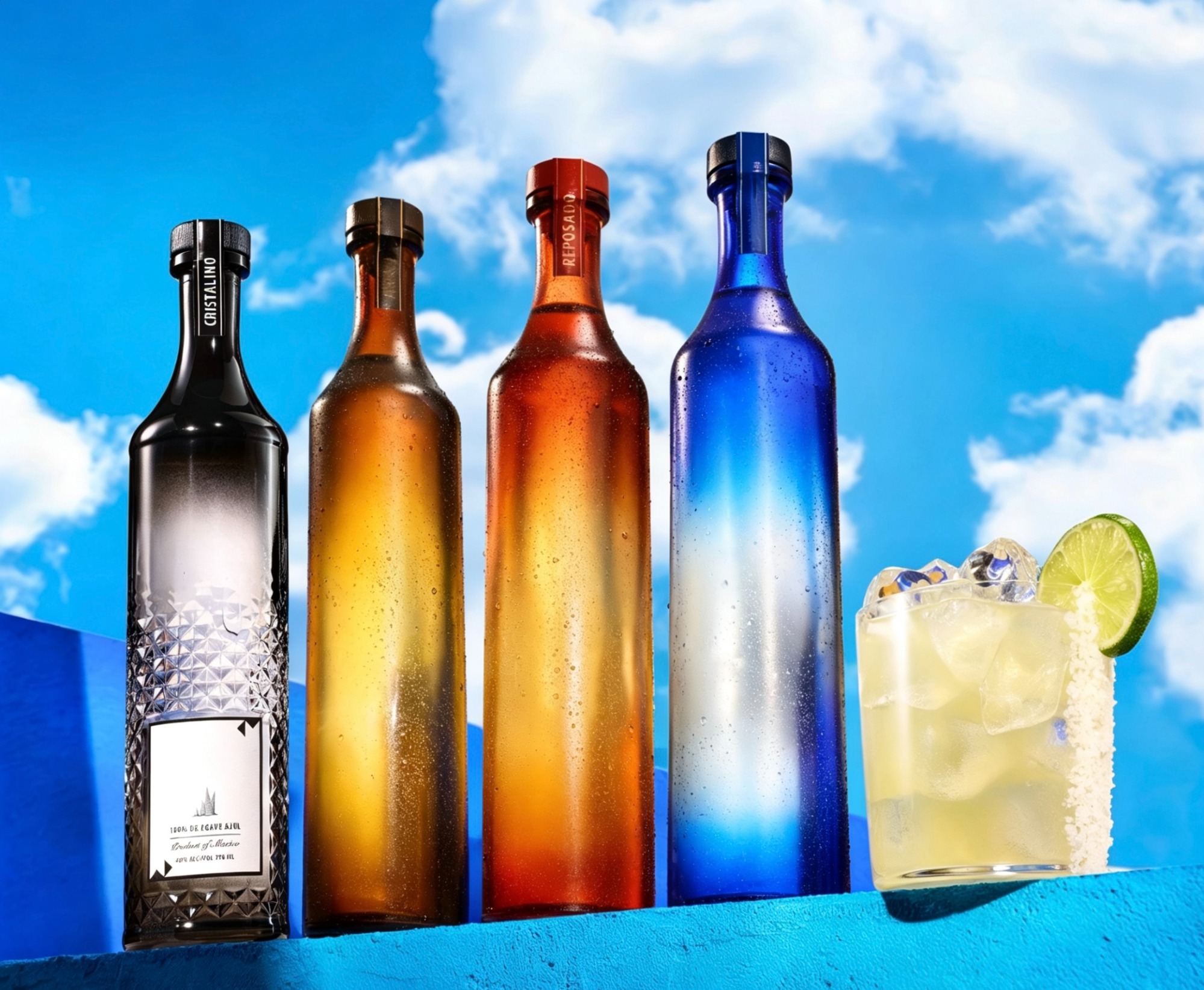 Insights into Premium Spirit Packaging (II)– Capturing Attention Through Strategic Color
 Cheers to a Shared Future!